For ebook: https://www.amazon.co.uk/dp/B0CZVGG4JG
For paperback: https://www.amazon.co.uk/dp/0956734294

Books and Book News
For ebook: https://www.amazon.co.uk/dp/B0CZVGG4JG
For paperback: https://www.amazon.co.uk/dp/0956734294
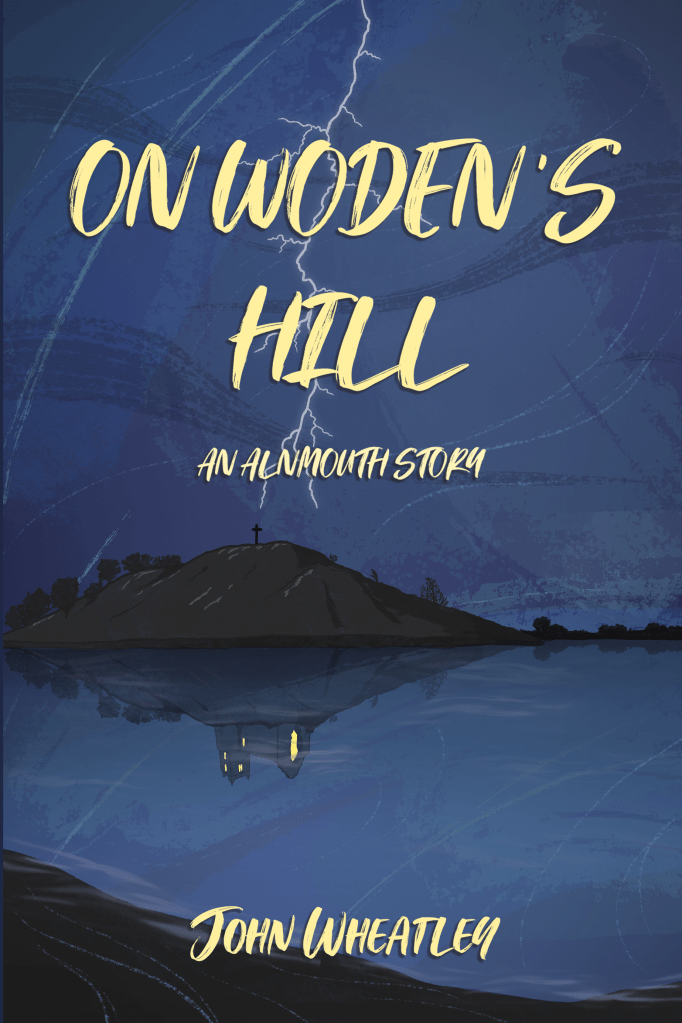
‘On Woden’s Hill’ is a time-slip adventure novel, set in Alnmouth on the Northumberland coast, aimed at teenage and young adult readers.
It is the story of three teenagers who become caught up in a ‘time warp’ and find themselves in the village as it was – a busy seaport – in the year 1806. It is based on a true incident: on Christmas Day, 1806, a huge storm diverted the course of the estuary of the River Aln, making it flow on the other side of the hill which looks out over the village – Church Hill, or, as some call it, Woden’s Hill. For Robert, Vicky and Lucy this process happens in reverse. An ordinary, slightly boring seaside holiday is transformed into an adventure where they have to adapt and survive in the bustling dangerous seaport of 200 years ago – making both friends and enemies as they go. A strong bond forms between Robert and a local girl, Anna, who helps them to settle in. They help to protect her from a violent and abusive uncle. This relationship leads to conflict and heartache when returning to their own time becomes a decision they have to make. A seemingly tragic ending is offset by a sudden twist revealed in the final chapter.
Click or copy to browser for sales page
For ebook:
For paperback:
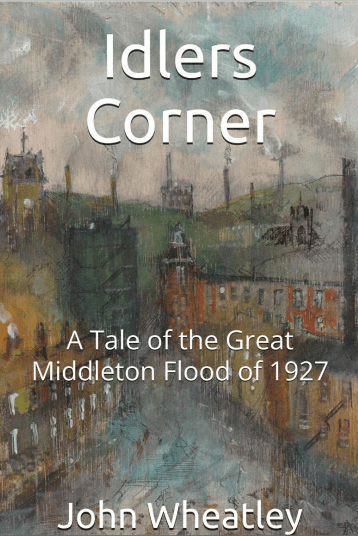
July 1927. After months of rain, the canal embankment a mile above Middleton collapses, sending millions of gallons of filthy water cascading down on the town, leaving destruction in its wake. How will the town cope? And how will Maggie Clayton, 20, a carder at the Neva mill, cope with the consequences of finding herself alone, on the day of the flood, with Danny Beswick, a bright spark of a lad whose intentions are not necessarily honourable?
Release Date 8th August, 2024
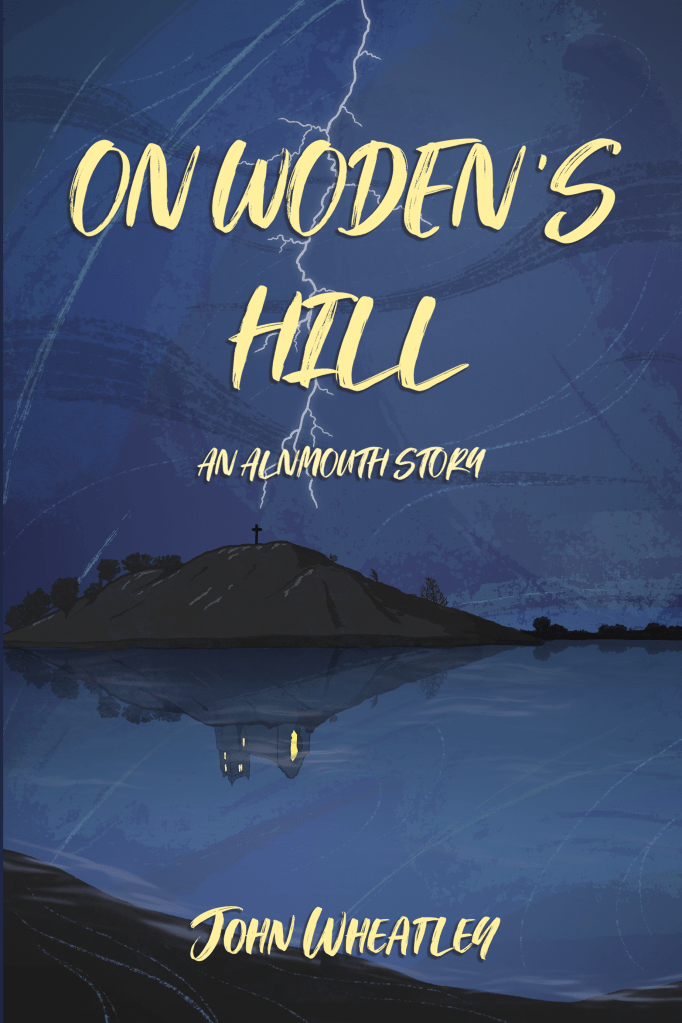
Hi everybody. Hope you are enjoying our first UK spell of summer and looking forward to the holidays! My new YA Paranormal/Time-travel adventure story, set in Alnmouth on the coast of Northumberland, is released on the 8th July. It will be available as both e-book and paperback. The e-book can be pre-ordered at the pre-release price of £1.77 from Amazon.
Anyone visiting Alnmouth on the Northumberland coast will get the impression of a pretty village seaside resort: little shops, pubs, tea-rooms, holiday lets etc. Bound by the estuary of the River Aln on one side and the North Sea on the other, it has beautiful sandy beaches, a links golf course and lovely scenery all around.
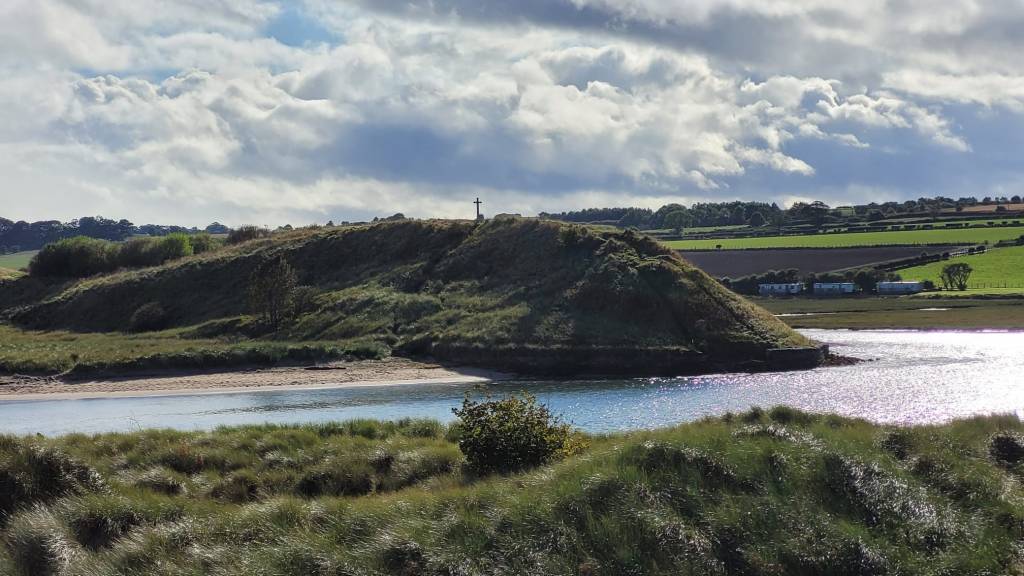
It hasn’t always been so. When John Wesley visited in 1748, he says: “We rode to Alnmouth, a small seaport town famous for all kinds of wickedness.”
No doubt he was speaking of the kind of vices often associated with ports: smuggling, hard-drinking, prostitution, street fighting.
On Christmas Day, 1806, a huge storm had the effect of diverting the course of the Aln estuary. Before then, it had flown to the sea on the far side of the great landmark, Church Hill – afterwards, and to this day, it flowed on the near side, cutting Church Hill off from the village.
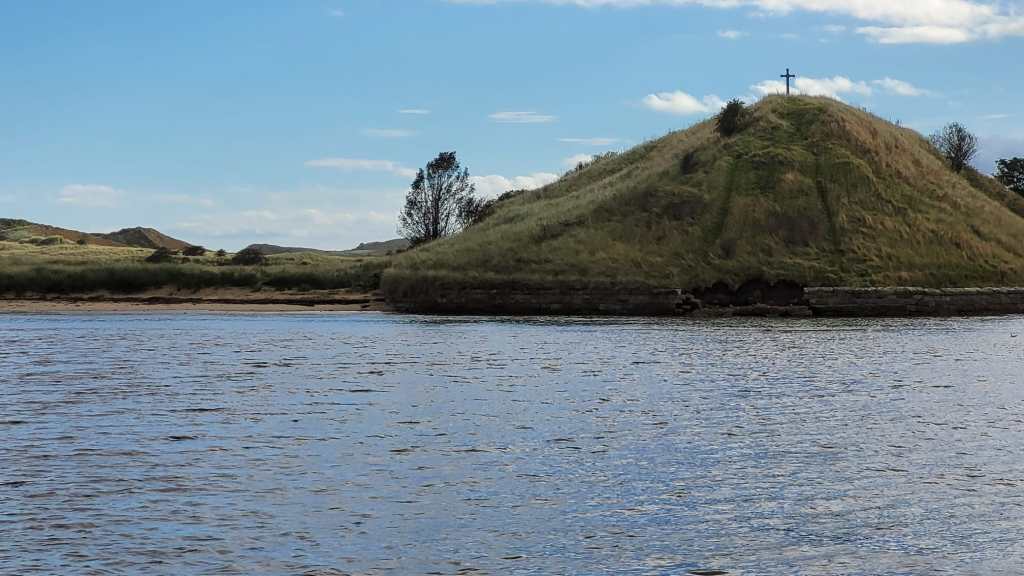
It was this combination of things that set me off to write a time-travel story. What if, at the height of a storm, you could be transported back to the wicked Alnmouth John Wesley alludes to?
The result is ON WODENS HILL , a story with teenage main characters and aimed at a Young Adult Audience.
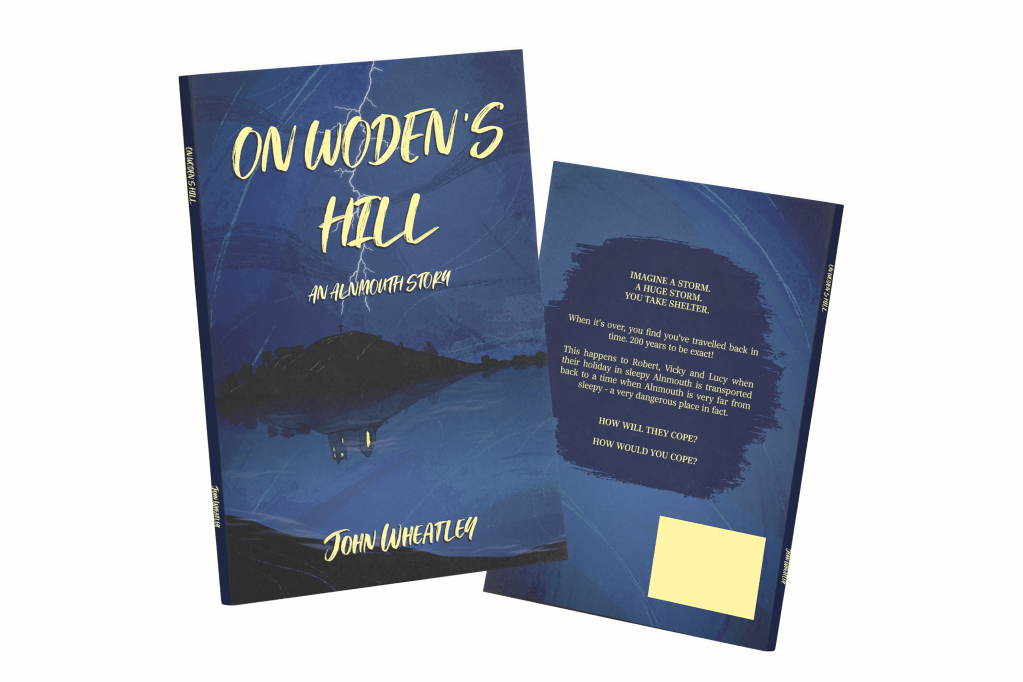
It is due for launch in July. Further details to follow.
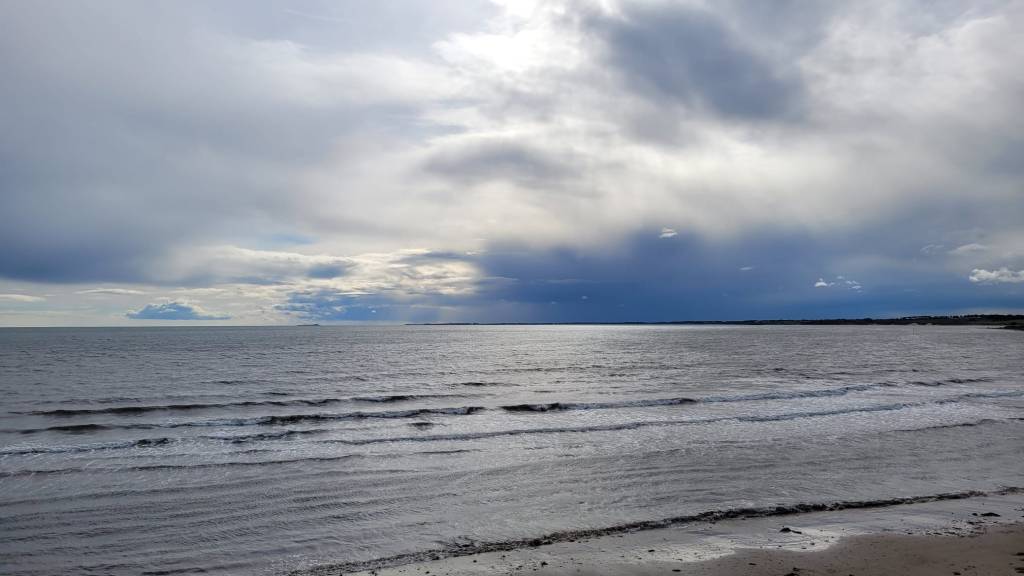
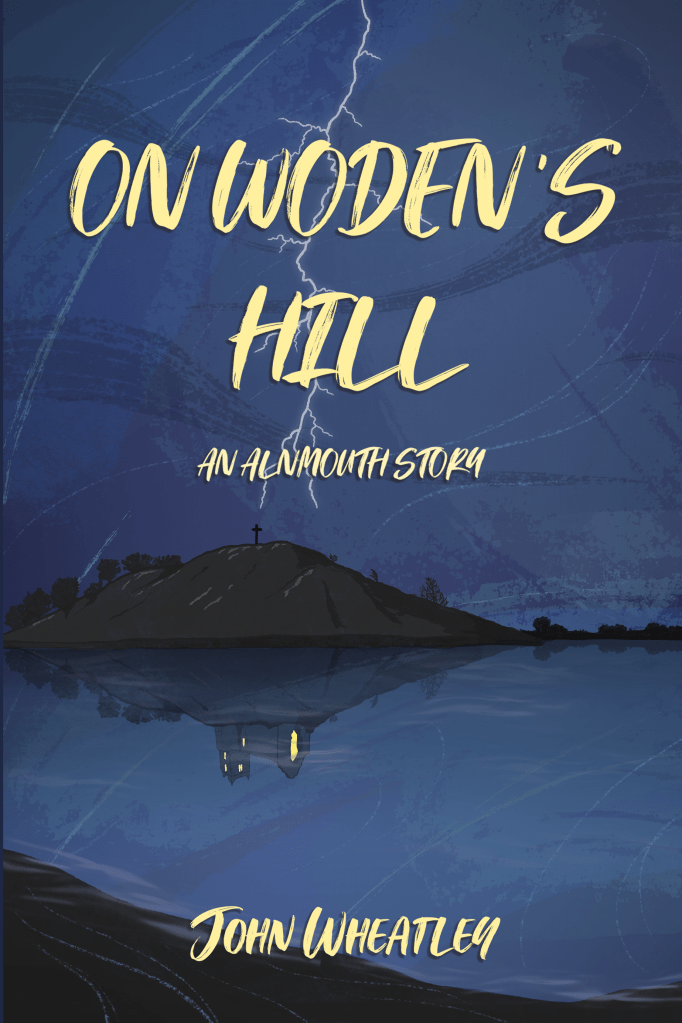
To be launched soon. Set in Alnmouth, on the Northumberland coast. It is a paranormal, time-travel novel, in which some young people are transported from their summer holiday in sleepy Alnmouth back to the great storm of 1806, and become trapped in the seaport of Alnmouth – a very dangerous place to be!

Set in the late eighties and nineties, ‘Consequences’ is a love story revolving around a miscarriage of justice. The central character and narrator, Tony, from Middleton, near Manchester, has served a prison sentence for manslaughter, persuaded by his solicitor to enter a guilty plea to avoid a murder charge, despite not having committed the crime. The narrative follows events leading up to the ‘crime’, beginning with a holiday romance between Tony and Jenny, in St Anne’s, an enforced separation, and a resumption of the relationship when they meet, four years later, on a college campus in Rochdale. The reunion is intense but also poisoned by jealousy, and a fight at a party between Tony and Ben Tyler, who he sees as a rival, leads to him being the obvious suspect when Ben’s body is later found.
PRESALE price at Amazon Kindle: 99p until 30th July
Release date of e-book and paperback 30th July
Fame and notoriety!
Standing off the coast of Wales, facing the Irish Sea, with a temperate climate yet sometimes – and unpredictably – exposed to violent extremes of weather, Anglesey has had its fair share of sea tragedies and tales of heroism.
Hindlea
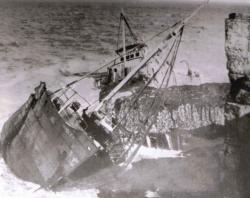
In 1959, almost exactly a hundred years after the loss of The Royal Charter, and just a few yards from the scene of that disaster, Hindlea, a 400 ton coaster was driven onto the rocks at Porth Helaeth, close to Moelfre. The incident was notable for the incredible bravery of the Moelfre lifeboat crew, who, in monstrous seas, brought their boat alongside to rescue Hindlea`s eight man crew. The Cox, Dick Evans, was awarded the RNLI Gold Medal for bravery for his part in the rescue. The same man achieved the same distinction again rescuing the crew of a Greek freighter Nafsiporos in 1966. He was 61 at the time. A statue of Dick Evans now stands outside the Lifeboat house at Moelfre, one of Anglesey`s true heroes.
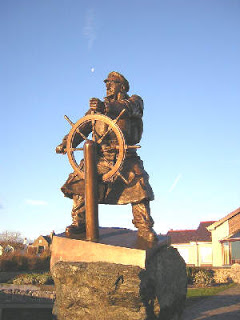
There are, no doubt, many untold tales of heroism, but the history of shipwrecks on the island`s coast occasionally takes on a more lugubrious tone. For some years, in the late 18th century, the notorious Crygill robbers thrived along the coast near Rhosneigr.There was some suspicion of what was known, in wreckers` lore, of using `false lights` to draw unsuspecting ships onto the rocks for plunder, but there is no true evidence for this. What does seem to be the case, however, was that the looting and pillaging of wrecked vessels went to dire extremes. When Charming Jenny was wrecked at Rhosneigr in 1773, it was alleged that the Captain`s wife, struggling to get to shore, had been deliberately drowned by a local man so that her rings and other valuables about her person could be pilfered. Distraught, her husband, Captain Chilcott promised vengeance through justice and in due course six men were prosecuted for the theft of spirits and other goods, and one man, Sion Parry, was tried at Shrewsbury and hanged. It was the end of the Crygill Robbers.Another ship to be dashed to pieces on the treacherous rocks of Rhosneigr was The Norman Court, a sugar trader returning from Jacarta in 1883. As the waves crashed over the hull, the crew took to the rigging to preserve their lives; eventually, the lifeboat crew from Holyhead was brought to the scene, and all but two of the crew were rescued alive. Some of them, it is said, had to be prized from the rigging like frozen washing.
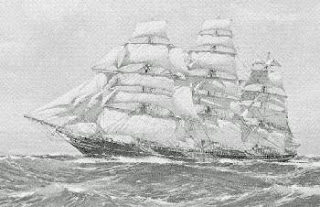
The Norman CourtBut of all the stories of wrecks on the Anglesey coast, the one which casts the longest shadow over the island`s history is that of The Royal Charter. On her return journey from Melbourne – carrying bullion and personal fortunes from the Australian gold fields – and only thirty miles from the Port of Liverpool, her destination, she was caught in the worst gale of the century, and just as she turned around Lynas Point to begin the homeward stretch, the gale turned to the north east and blew her mercilessly towards the vicious rocks of the Anglesey shore. One after another her anchor chains snapped, and just before dawn she grounded on the sands below Porth Helaeth. Before the light revealed her true position, the rising tide began to smash her against the rocks, and it was too late.
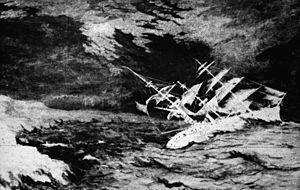
Of a crew and company of five hundred, only forty survived. Without the bravery of the men of Moelfre who risked their own lives on the treacherous rocks, the death toll would have been much higher. Many of the dead were women and children. Some drowned, weighted down with pockets full of gold they tried to save; others were simply smashed against the rocks and died from impact injuries. Many of the bodies were taken to the small church of St Galgo, just above Moelfre, and the churchyard there bears sad witness to whole families as well as individuals who lost their lives. There is hardly a church along this stretch of coast, however, that did not provide the final resting place for Royal Charter victims, as the tides washed bodies further and further afield.Visiting the scene in the aftermath of the disaster, Charles Dickens recorded, in The Uncommercial Traveller, the heroism of the Reverend Stephen Roose Hughes, who cared meticulously and with great humanity for the dead, writing over a thousand letters to bereaved relatives.
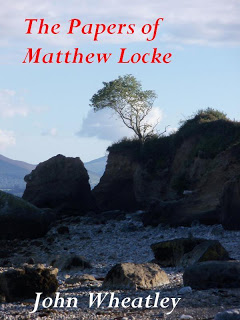
John Wheatley`s latest Anglesey novel, “The Papers of Matthew Locke” features both the NORMAN COURT and CHARMING JENNY. The novel is available from Amazon as a paperback or Kindle E-book.
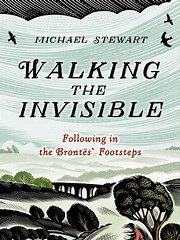
An inspirational journey in thought and time
What I like very much about this book, and liked from the start, was simply the feel of it. It’s a book about going on walks, and about the Brontes – Patrick, Branwell, Emily, Anne and Charlotte – and you know from the outset that you couldn’t find a more companionable guide or walking mate than Michael Stewart. It is a serious book, of course, but it contains lots of mirth. There is also Wolfie, the patient dog who accompanies every walk, shares the tent when necessary, and who must be the most Bronte savvy dog in the entire universe.
Michael Stewart begins by telling us of his own background, educated at a run-down comp in Salford, giving little to its students and expecting little from them, and from there to a job in a factory. The journey from this unpromising start to the inspirational figure who created the Bronte Stones project, who wrote ‘Ill-Will’, an imaginative recreation of the years when Heathcliff absented himself from Wuthering Heights, is, in part, the journey which ‘Walking the Invisible’ takes.
It is about places which had connections with the members of the Bronte family at various times in their lives, taking in Haworth, of course, Thornton, Hartshead, Scarborough, Liverpool, Hathersage, Luddenden Foot and others. Exploring the places, the landscapes, the buildings, the paths, talking to people as he walks – to locals and to other experts – Michael Stewart finds his way, as closely as it is possible to do – into the way the thoughts and feelings of the individual members of the Bronte family were influenced by these places, and uncovers some fascinating and partly unanswered questions about both the writings and the writers.
The book is accompanied by sketches, notes and maps, so that in a way it is reminiscent of Wainwright, and could well act as a practical guide for readers who wish to follow in Michael Stewart`s [and the Brontes’] footsteps. If I say that I am planning to read my way through the Bronte works again, to follow up on various books cited in the bibliography, and to embark myself on a number of long walks (which I may, however, have to break down into manageable chunks) you will be able to judge what an impact this book has had on me.

 John Wheatley Author