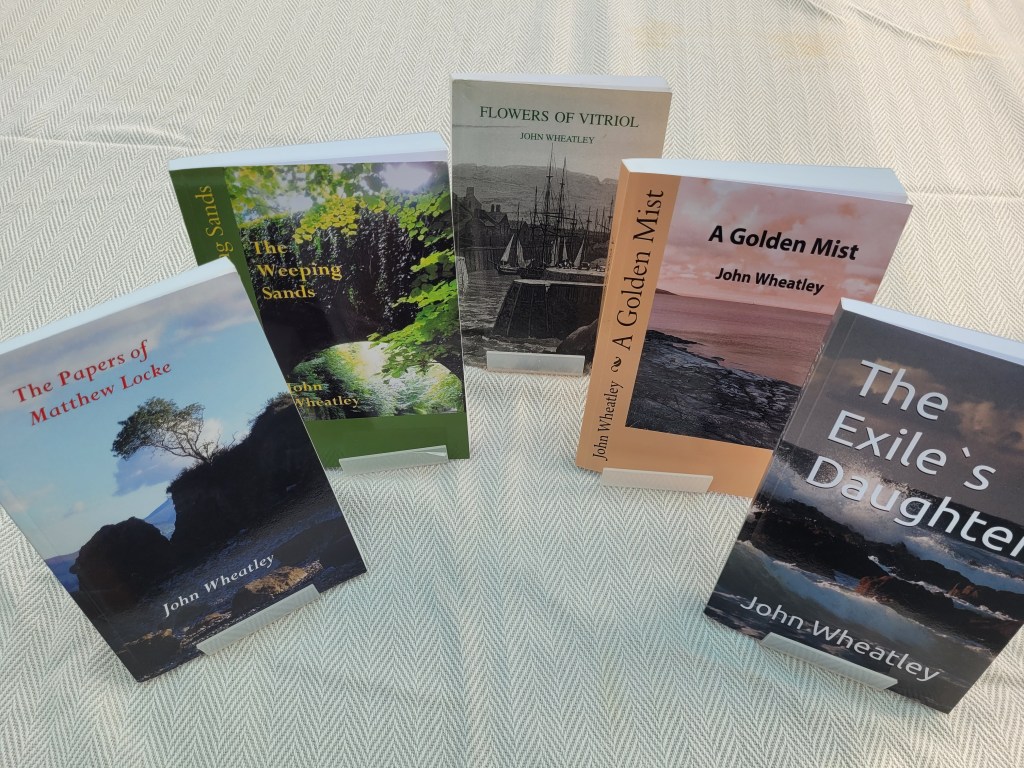
Welcome to the extraordinary world of John Wheatley’s Anglesey novels. Starting with “Flowers of Vitriol” the collection the collection takes you on a journey through history, each page crafted with deep passion and meticulous detail, from the copper mines of Parys Mountain through the windswept Anglesey landscapes to the intense battlefields of WW1. The stories are filled with themes of love, betrayal, resilience, embracing myth and legend, and a magic that lingers. Truly unforgettable reads.
The graves of the many who lost their lives when The Royal Charter was wrecked on the coast of Anglesey in the great storm of 1859
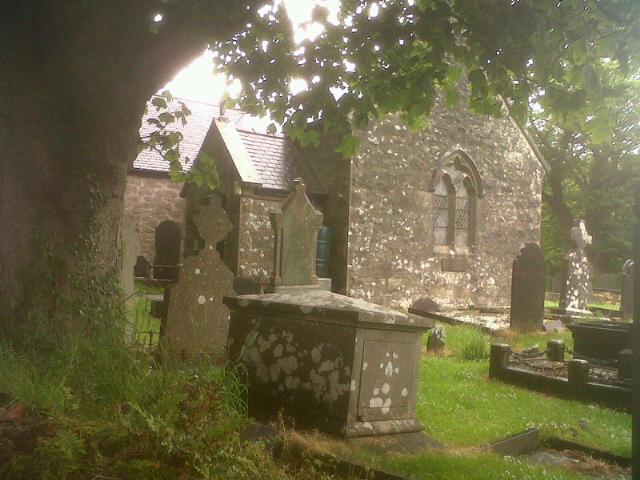
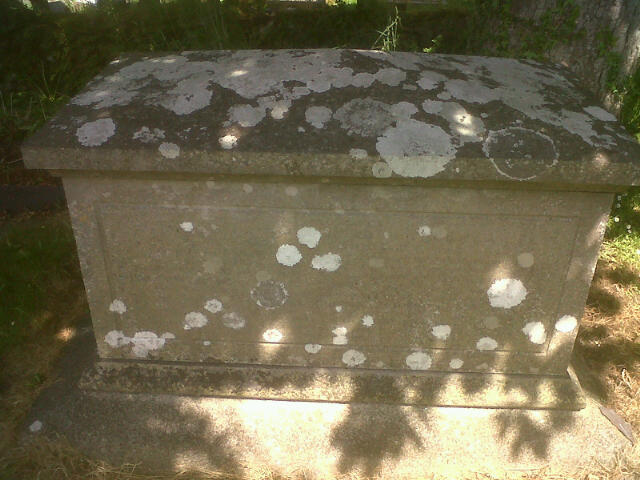
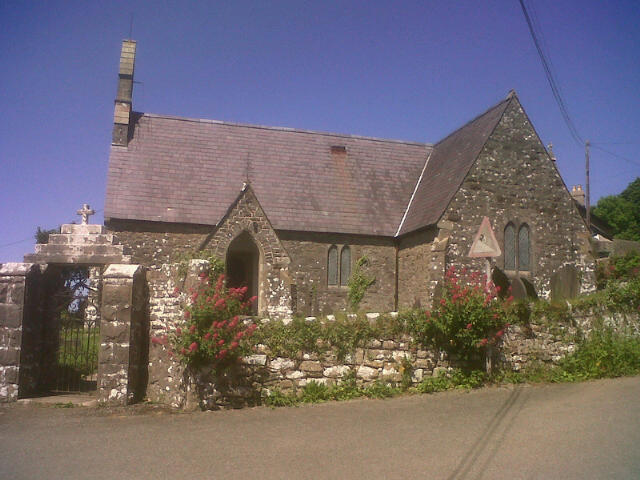
The Parish Church of St Gallgo with the Fowler tomb in the foreground
The distribution of churches on Anglesey tells you something of its history. The non-conformist chapels – the Bethesdas and Salems and Tabernacles – are in the towns and expanding villages; the older churches are lost in woodland, in remote spots surrounded by fields, on cliff-tops overlooking the sea. Many of them have links to ancient cells and foundations, the time of the saints. Through the centuries, they served a scattered rural population; folk tramped along country paths from their farms and cottages to the place of worship, or so, in a Thomas Hardy-like idyll one imagines them. Frequently, of course, they didn`t. The old church was in decline, there was absenteeism and probably a bit of despair in the clergy; the levels of poverty, consumption, infant mortality on the island were appalling; for many parishioners the bottle provided more comfort than the Gospel: it`s not surprising that successive revivalist waves, promising a new hope, spread across the island like wild-fire. Their effects, however, were of short duration.
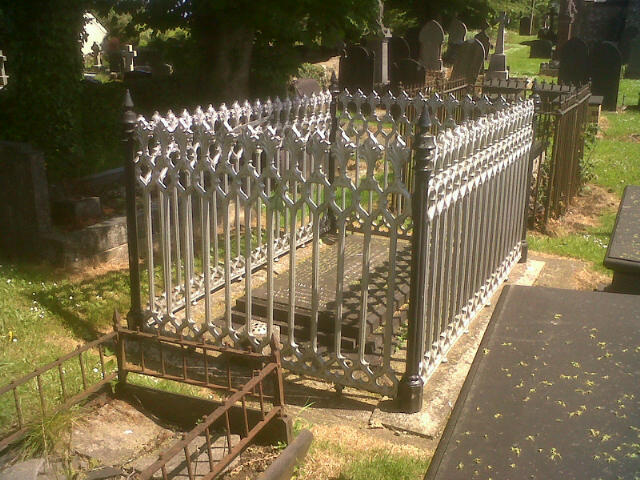
The grave of Stephen Roose Hughes, with a tribute composed by his wife
If the clergy were sometimes guilty of burying their heads, the figure of Stephen Roose Hughes, the Rector of St Gallgo`s church in the parish of Llanallgo stands out, a beacon of light. History dealt him a unique and tragic hand. Half a mile from his church, down the hill towards the rocky coast, lies the fishing village of Moelfre, and it was close to here, in October 1859, that the auxiliary steam clipper, the Royal Charter was smashed to pieces on the vicious rocks of Porth Helaeth. The romance of the Royal Charter is that it was a treasure ship carrying bullion from the goldfields of Australia. The reality is that over 450 men, women and children lost their lives, and it was Stephen Roose Hughes who dealt with the mess. He had the dead, many of them appallingly disfigured and dismembered brought to his church. He kept meticulous records of distinguishing features – a birthmark here, an old scar there – of those who could be identified by no other means. He buried them decently and exhumed them when, later, a family member came to take them home. He wrote over a thousand letters to relatives all over the world seeking news of their loved ones. If, in his own heart he ever found an echo of Christ`s words, take this cup from my lips, he never faltered from what he took to be his duty.
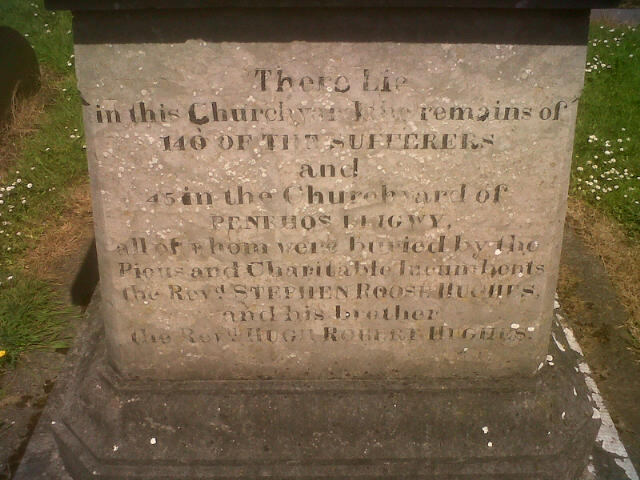
INSCRIPTION ON THE MONUMENT TO THE MEMORY OF THOSE WHO PERISHED ON THE ROYAL CHARTER IN THE CHURCHYARD OF ST GALLGO“There lie in this Churchyard the remains of 140 of the sufferers and 45 in the Church of Penrhos Lligwy all of whom were buried by the pious and charitable Incumbent the Revd STEPHEN ROOSE HUGHES and his brother the Revd Hugh Robert Hughes” He was fortunate in his historian. The story of the Royal Charter was sufficiently famous to bring Charles Dickens to Anglesey a short time after the disaster, and in “The Uncommercial Traveller” Dickens records the tale of the great storm and the wreck, and the heroism of Stephen Roose Hughes. He was not so fortunate as to enjoy such acclaim for long, however, and perhaps, if we think of him as true to himself – and why should we not – he would not have wanted it. It is sad, nevertheless, to reflect that a little more than three years after these events, Stephen Roose Hughes came home one day from parish duties, sat down in a chair and died there. He was 46. His tomb is in the churchyard of St Gallgo, close to so many of the dead of the Royal Charter he had laid to rest. The graves of the Royal Charter dead are now are now a hundred and fifty years old. In St Gallgo`s churchyard, some of them stand now mere blackened and pitted stumps, like carious teeth, unnamed. The most ornamental, tombs raised by families, in stone, bear inscriptions now so weathered and made obscure by lichen that in another generation or two they will be lost entirely. Others, favoured by a sheltered aspect, or by the choice of slate rather than stone for their memorial, will last a little longer.
Inside the Church of St Gallgo where the bodies brought from the wreck were laid. Buckets of pitch were lit to offset the terrible stench
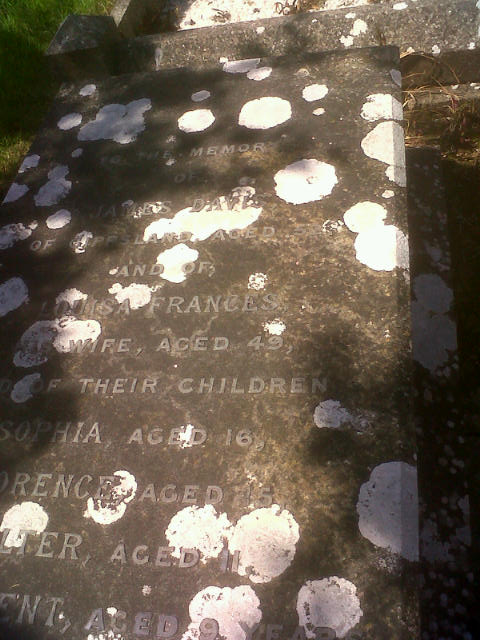
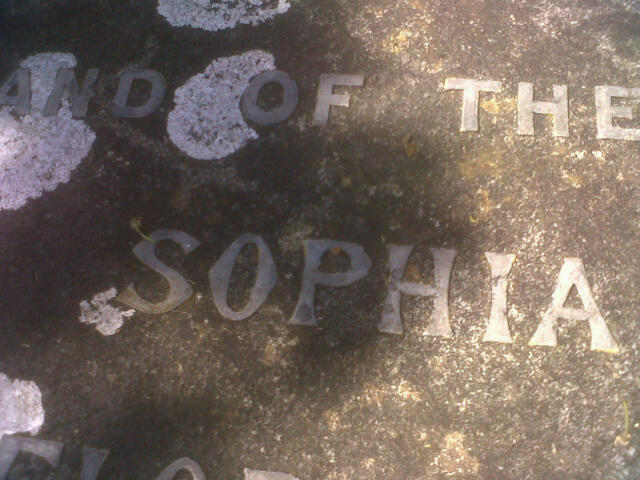
The Davis family lie together in a tomb on the side of the graveyard farthest from the sea, by the landward wall. The mother, Louisa Frances, aged 48, her two grown up daughters, Sophia and Florence and two younger sons. I touch the inscription of Sophia`s name with some feeling. It is Sophia whom I chose to be the author of the fictional diary of the Royal Charter`s voyage from Melbourne which forms a central part of my novel “A Golden Mist”. I imagined her bright, vivacious, precocious, a lover of life. And here the real Sophia lies, dead at sixteen.
JAMES DAVIS AGED 52AND OF LOUISA FRANCES HIS WIFE AGED 49AND OF THEIR CHILDRENSOPHIA AGED 16 FLORENCE AGED 15WALTER AGED 11 AND DERWENT AGED 9 YEARSALSO OF ELLEN FENWICK AGED 33 AND HER 4 CHILDREN ALL PERISHED IN THE ROYAL CHARTER OCTOBER 26th 1859
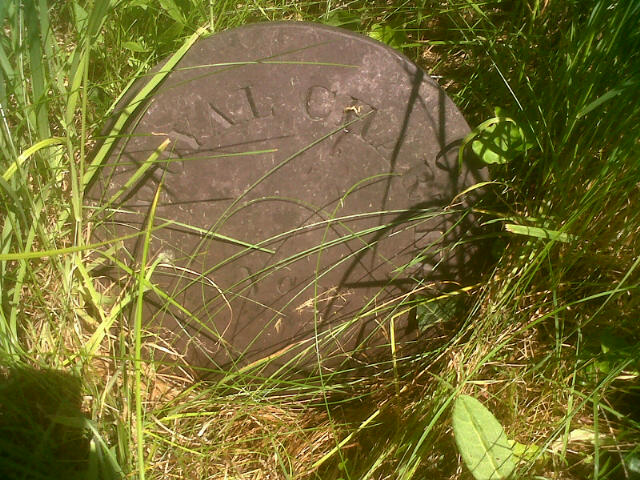
The Fowler tomb just a few yards from the church door is weathered to a greater degree than that of the Davis`. The inscription reads:BENEATH REPOSE THE REMAINS OF EDWIN FOWLER AND OF HIS DAUGHTERS JANE & IDA EDITH EMILY WHO WERE LOST IN THE WRECK OF THE ROYAL CHARTER FROM MELBOURNE OFF THE COAST OF ANGLESEA 1859THIS MONUMENT HAS BEEN ERECTED TO THEIR MEMORYAND TO THE MEMORY OF ANNA FOWLER THE BELOVED WIFE OF EDWIN FOWLER WHO PERISHED IN THE WRECK [BUT WHOSE REMAINS WERE NOT RECOVERED] BY THEIR ORPHANED CHILDREN FANNY LUCRETIA & EDWIN HERE ALSO LIE THE REMAINS OF EMMA CALF THE NURSE OF IDA. HER BODY WAS RECOVERED BUT A FEW PACES FROM THAT OF HER INFANT CHARGE. SHE WAS FAITHFUL UNTO DEATH
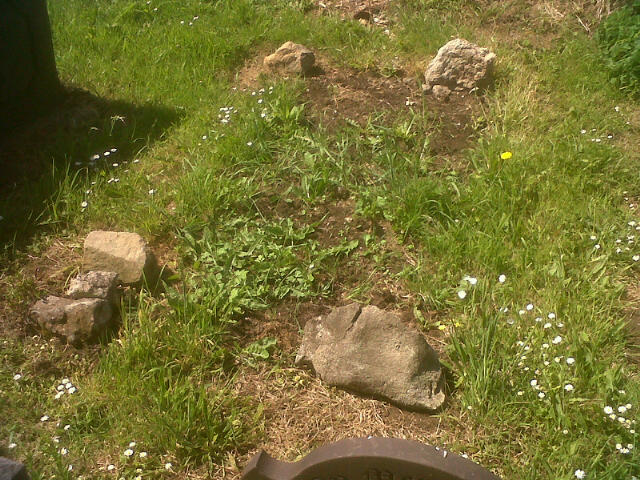
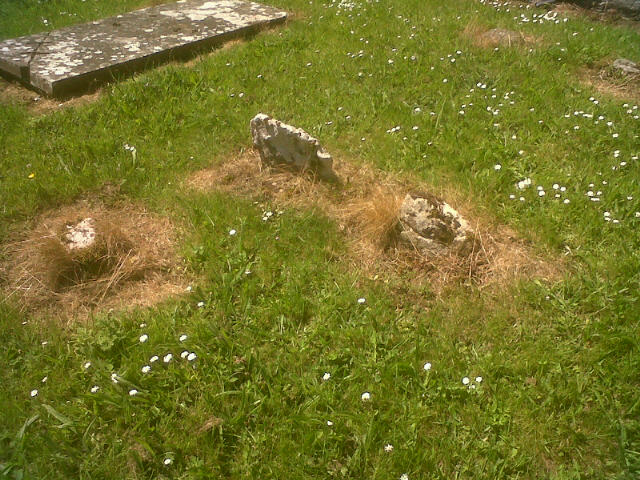
Unnamed gravestones of Royal Charter victims in St Gallgo`s churchrard
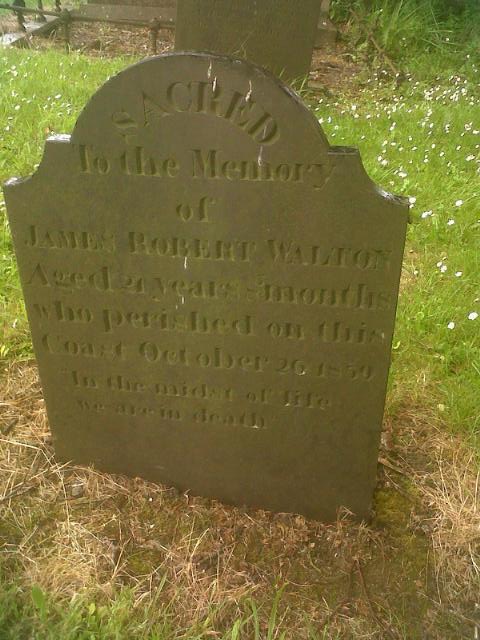
The headstone of Robert Walton in St Gallgo`s. He is one of half a dozen who has an individual gravestone with an inscription.Not far from St Galgo`s church, on a quiet country lane, just below Mount Bodafon, is the lovely church of Penhros Lligwy. Its incumbent, in 1859, was Hugh, the brother of Stephen Roose Hughes, and 45 Royal Charter victims lie here. Parts of the churchyard now, close to the church itself, are neglected and overgrown, and it seems that many of the Royal Charter graves, if they were marked at all, are now lost. As in other ancient graveyards on Anglesey, the ground is so honeycombed and unstable that you tread in some places at your peril!
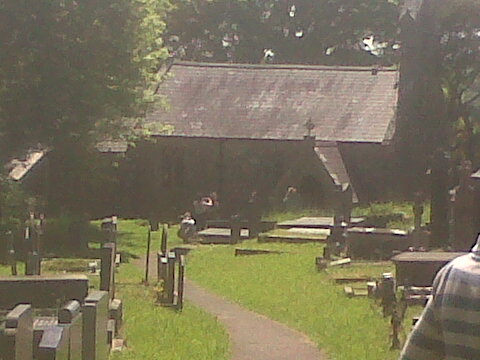
The Church of Penrhos Lligwy where 45 victims were interred.
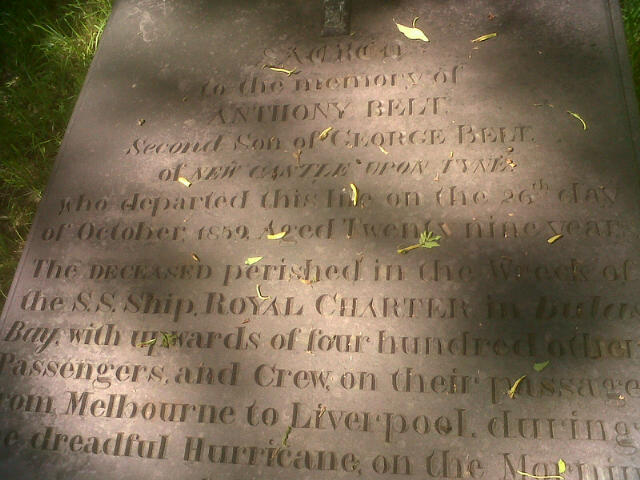
One tombstone, however bears a clear and detailed inscription. It is that of Anthony Belt from Newcastle.
The church of Llaneugrad, near the village of Marianglas, is the most secluded of all the Royal Charter burial locations. It is approached through the hollow of a woody dell, half a mile from the lane, and surrounded by high trees.
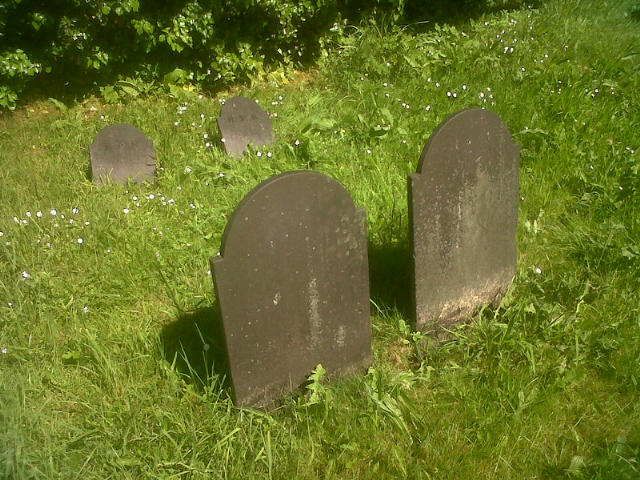
The photograph shows one of the typical markers of unnamed graves, pitted and weathered. Preserved side by side, however, in the cemetery of St Eugrad, and commemorated with matching stones in the more durable slate are Henry Molyneux and Edward Pearn Sanson, aged 56 and 26 respectively. They look like companions. Here, there is nothing to remind anyone of the sea. Perhaps they would have preferred it that way.
The records tell us that bodies from the Royal Charter, caught in the variable currents of the late Autumn were carried as far as the Isle of Man and even the coast of Ireland. The longer the bodies were in the water, the less chance there was of identication. At the head of Red Wharf Bay, in the churchyard of St Mary, Pentraeth, several tablets, unobtrusive and modest, simply carry numbers, Royal Charter 1, Royal Charter 2, Royal Charter 3 etc. The burials and the simple memorials were commissioned and paid for by Lady Vivian, of Plas Gwyn.
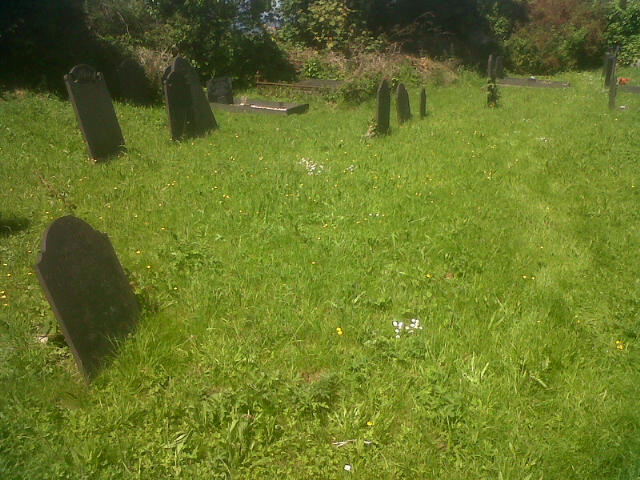
On the far side of Red Wharf Bay stands the church of St Dona. The modern village of Llanddona is high up above; to get to the old hamlet, where the church is to be found, you follow a narrow road which winds steeply downwards, affording some magnificent views across the bay, where in the distance, just visible are the islands of Ynys Moelfre and Ynys Dulas, between which, in the blackness before dawn, and in the eye of the storm, the Royal Charter was swept the last few metres to its fate on the rocks of Porth Helaeth. It is known that bodies washed up on the sands just fifty metres below the church were buried in the cemetery here, though none are marked. However, between two graves, David Jones, 1852, and Owen Jones, 1861, there is a conspicuous gap.
IMay it be that in this space unidentified Royal Charter victims were buried?
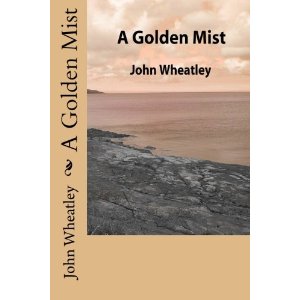
The Church of Llanddona John Wheatley`s novel, A Golden Mist, which incorporates the story of the loss of the Royal Charter, is available as an e-book/Kindle download from Amazon. It is also available as a paperback from Amazon
Welcome to the extraordinary world of John Wheatley’s Anglesey novels. Starting with “Flowers of Vitriol” the collection the collection takes you on a journey through history, each page crafted with deep passion and meticulous detail, from the copper mines of Parys Mountain through the windswept Anglesey landscapes to the intense battlefields of WW1. The stories are filled with themes of love, betrayal, resilience, embracing myth and legend, and a magic that lingers. Truly unforgettable reads.
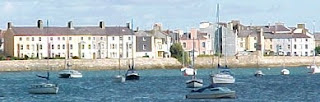
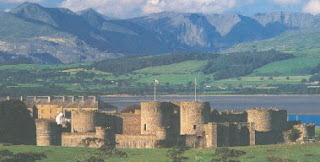
Beaumaris, on the isle of Anglesey, is as pretty as its name suggests.
Standing at the north westerly end of the Menai Strait, facing the headland of Penmaenmawr and the Welsh mountains, it retains something of the genteel elegance of a Victorian seaside resort. And so it was – Queen Victoria herself stayed in the town, a guest of the Williams-Bulkeleys of Baron Hill, and as the infant tourist industry began to burgeon during Victoria`s century, the leisure craft from Liverpool came along the Welsh coast, to Rhyl and Llandudno, and to Beaumaris bringing the people of the city seeking distraction, relaxation and romantic scenery.
The castle of Beaumaris was, like so many of the Welsh castles, built as part of Edward 1st`s grand strategy for subjugating Wales, and the local population were shifted away to the aptly named Newborough, at a safe distance – a medieval version of ethnic cleansing. Unlike many castles, set in high and commanding positions, Beaumaris, at the level of the present High Street, looks comfortably sedate and picturesque – a bit like Beaumaris itself. The landscape has changed, of course, over the centuries. The castle, with its tranquil moat, now stands a good hundred yards – across pleasant flat greensward suitable for football games and parking cars – from the shoreline on the Menai Strait. Back in the day, the moat connected directly to the sea so that ships could sail right up to the castle walls.
By the time Lady Ann, the young wife of Sir Richard Bulkeley – that most pre-eminent of Anglesey families – came to live in Beaumaris in the early seventeenth century, the castle was ivy-clad and neglected. Two hundred years were to pass before such ruins became of romantic interest, and longer still before anyone would have dreamed of paying admission money for a family ticket to take a look. It was to play a brief role when the civil war came to Beaumaris, in the 1640s, but apart from being a place where sheep grazed, or where you could pinch a few stones for your farmhouse or your barn, it remained, for a long time, pretty much unloved.
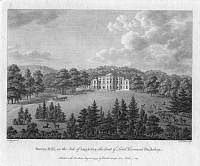
Baron Hill in the 17th Century
Lady Ann, of course, lived in the newly built mansion on the slopes above the town, Baron Hill. She was not Welsh. Her family was of the Kentish gentry, and it is probable that she met Sir Richard in London, at the court of King James 1st. When Baron Hill was built, it was envisaged that Prince Henry, the eldest son of King James would be, when he became vice-regent of Ireland, a regular guest. When Lady Ann took up residence in Beaumaris, far from being condemned to a life out in the sticks, she would have been looking forward to being the mistress of a household which would have the immense prestige of being, literally, fit for a king.
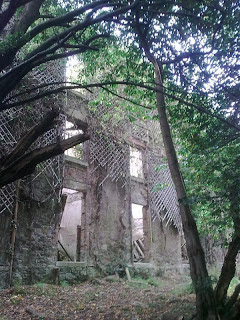
The ruins of Baron Hill, today. It was abandoned in the 1920s
Sadly, Prince Henry died, and his younger brother Charles was to become king when James died, a combination of circumstances which changed the course of English history. It may also have been partly responsible for the changes which took place in Lady Ann Bulkeley`s life. Now with young children, and possibly disappointed to lose all the glamour and éclat of being Prince Henry`s prestigious host at his home-from-home in Wales, she set upon a course of action which, involving lust, adultery, murder, vengeance, and, at last, a kind of grim nemesis of natural justice, was worthy of the plot of a Jacobean tragedy.
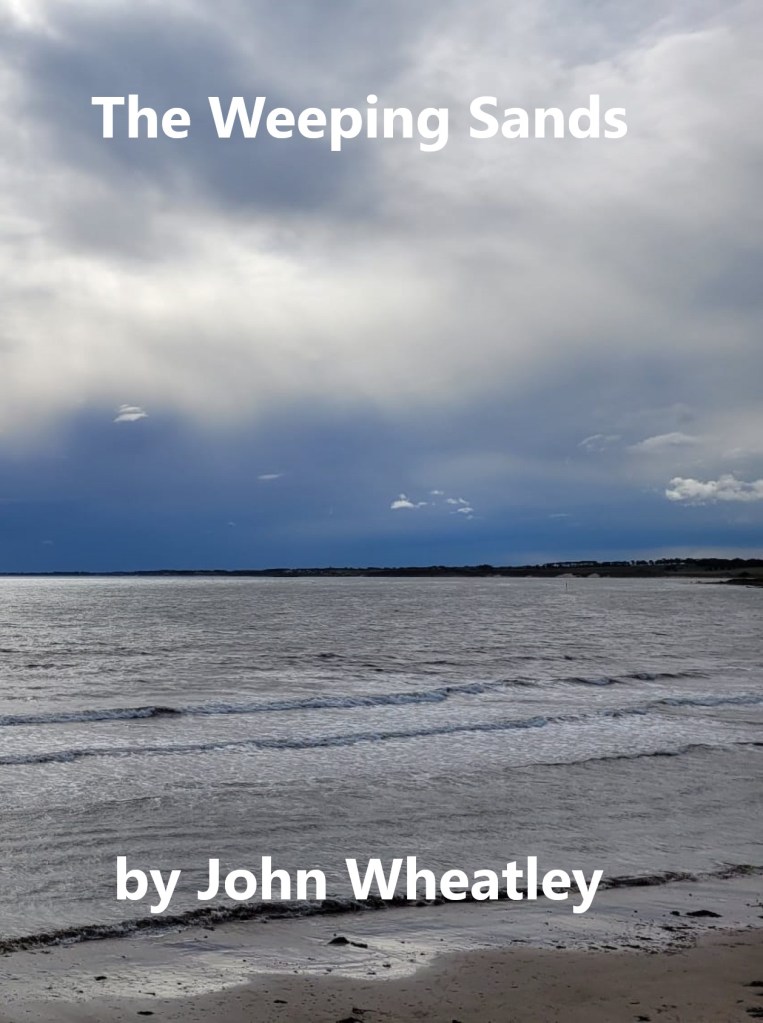
The story of Lady Ann Bulkeley, of Baron Hill, is featured in John Wheatley`s novel, `The Weeping Sands`, available as an e-book and a paperback at Amazon.
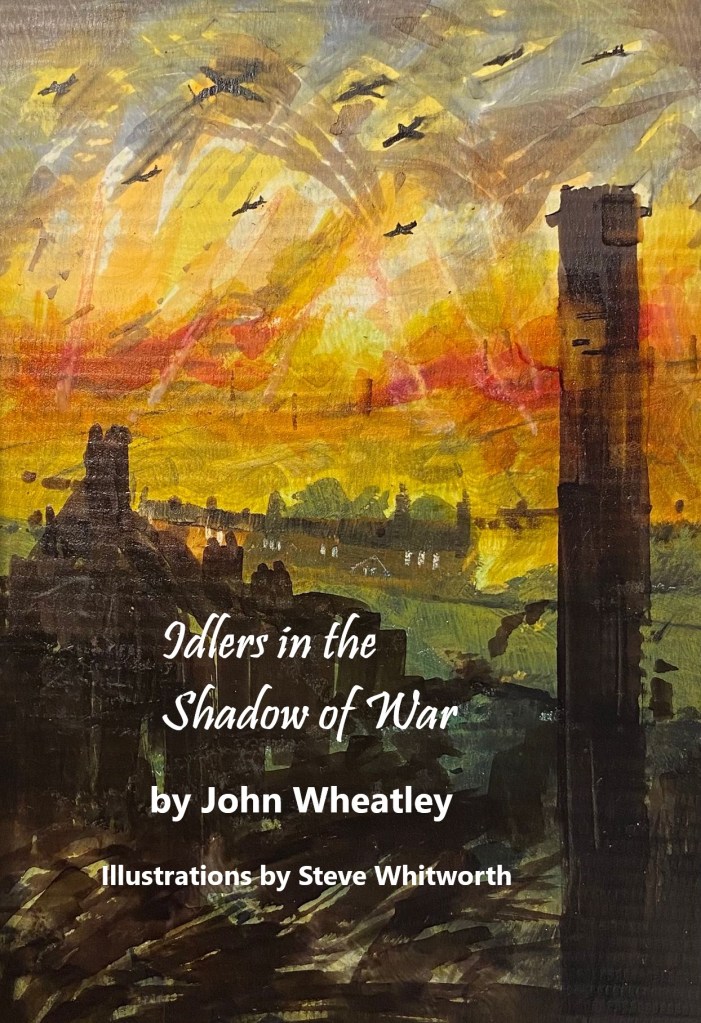
The third book in the Middleton Idlers Series is now available. It follows the fortunes of the Clayton family – with their lives and loves and losses- from 1938 to the declaration of war in 1939 and to the Manchester Christmas Blitz of 1940.
When I finish a book, I often go back to something I wrote a while ago. ‘The Weeping Sands’ was my third title and also the third book with an Anglesey setting. I attempted to write a story incorporating three time periods, from present day back to the English Civil War – and weaving a tale where the threads connecting the different time periods would gradually emerge. Three time periods and four love stories. I’ve just read it again and I think it might be my best book!
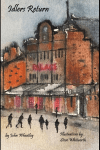
Idlers Return, with cover and illustrations by Steve Whitworth
Five years on from the Middleton flood. Maggie, now married to Arnold White, has a little girl, Rosie, now four. Annie and Bert are now married but are finding it’s not all a rose garden – especially when the dearth in Middleton’s cotton industry threatens Bert’s job. And living with the in-laws is not always easy!
What will happen when Danny Beswick turns up on the Middleton scene after chancing his luck in Blackpool for the last five years? Will he go looking for Maggie and his natural daughter?
And what will be the impact on the Clayton and the White families already struggling with their various problems?
I’ve had this one on the backburner for a while, but now I’ve decided to put it out there.
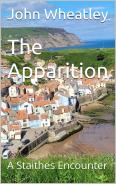
The story of The Apparition alternates between two time periods, 2010 and 1910-20. In 2010, the main character is ANNA. In 1910-20, the main character is CHRISTINA. The two narrative strands are linked by the village of Staithes, on the beautiful, rugged North Yorkshire coast.
Anna has inherited a small ‘fisherman’s cottage in Staithes. In the middle of a divorce from a controlling husband, she visits occasionally at weekend to get away from things, to help maintain her sanity and to think. Her peaceful weekends are disturbed, however, by the increasing sense that there is a ‘presence’ in the cottage.
Christina Tasse is a young artist. Her potential has been recognised, and she now has the opportunity to work with her mentor, Charles Penner, some years older, as an apprentice, at Staithes. On the verge of womanhood, in Edwardian England, she is both excited and apprehensive about what lies ahead.
The two narratives finally merge when the apparition materialises and silently leads Anna to a special place along the cliffs near Staithes. As Christina paints, Anna looks at the scene, and the two share a kind of epiphany of self-realisation.
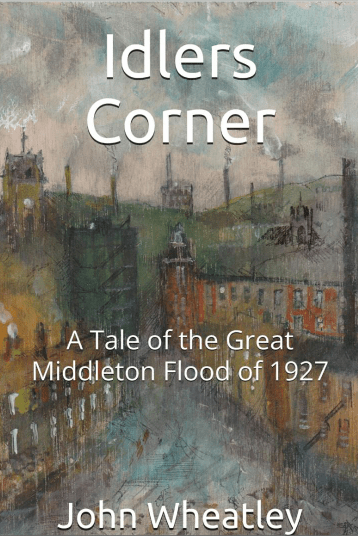
Waiting for the release of Idlers Corner on the 14th August, I happened to take a look at one of my earlier books, The Exiles Daughter.
It’s a tale of Anglesey and the Great War – a love story which follows the life of Lauren Bucievski living in exile in Church Bay, on the lonely west coast of Anglesey. When she befriends the likeable and happy-go-lucky Jimmy Jilkes, and when the charismatic Stefan turns up from Poland, her life is thrown into conflict, vulnerable as she is, in her isolation, to the dangers of her own dawning sexuality. The outbreak of war in 1914 becomes the defining factor in how each of their destinies will turn out.
Anyway, I thought it was worth refreshing it and putting it out there again. You can get it for 99p on Kindle.
John’s new Middleton story, Idlers Corner is set for release on the 14th August. However, you can pre-order it for kindle and other e-book devices: follow this link:
If you pre-order, the book will be automatically delivered to your device on the 14th August. [Pre-orders greatly help the author as they give the Amazon algorithm something to get its teeth into.!]





 John Wheatley Author